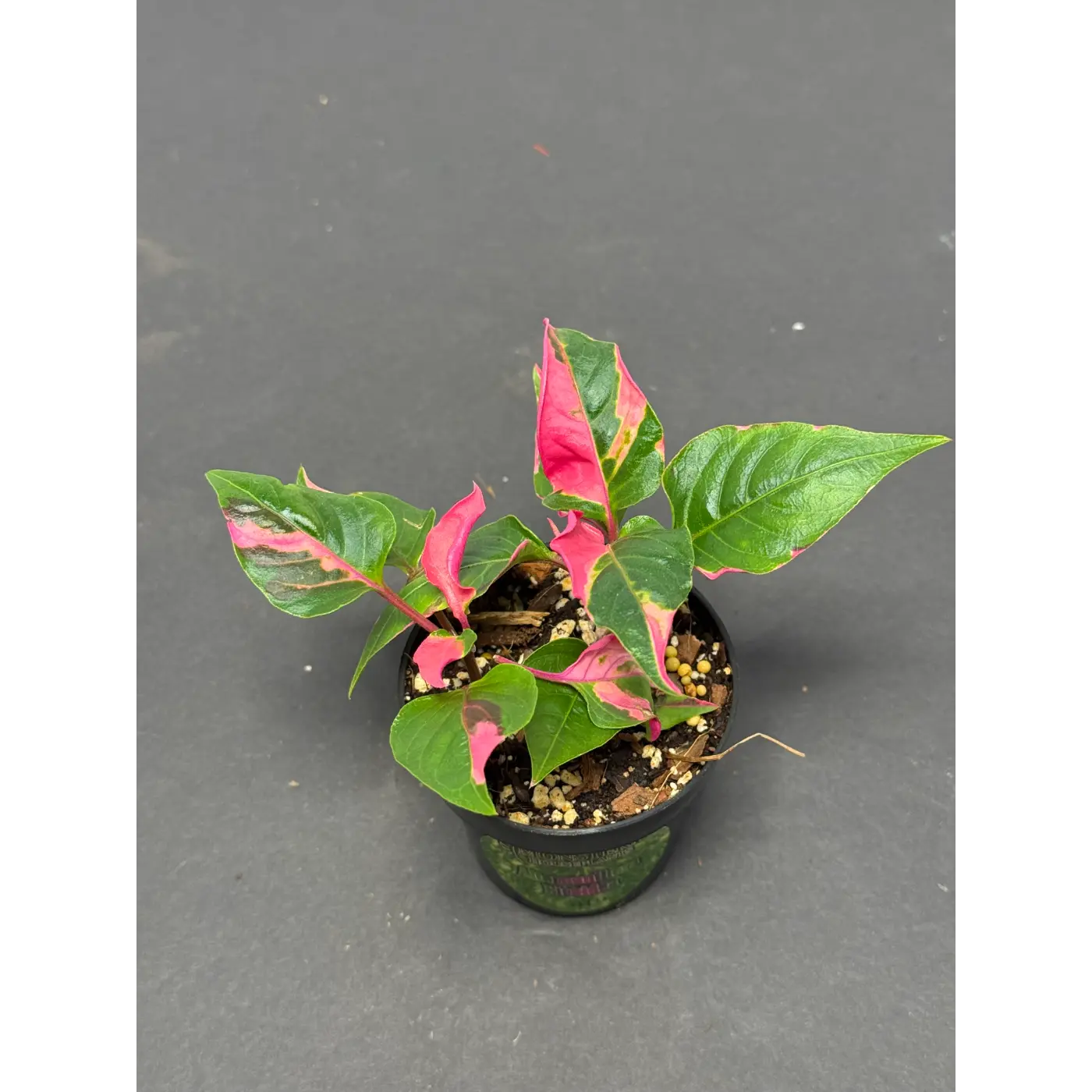
Alternanthera ficoidea (19) (Joseph’s Coat / Parrot Leaf / Calico Plant) in a 3-inch pot
Alternanthera ficoidea (19) (Joseph’s Coat / Parrot Leaf / Calico Plant) in a 3-inch pot
Plant Bio
Plant Bio
Alternanthera ficoidea, commonly called Joseph’s Coat, Parrot Leaf, Calico Plant, or Joyweed, is a tender perennial native to the Caribbean, Central America, and South America. It belongs to the amaranth family (Amaranthaceae) and is grown almost exclusively for its striking foliage rather than flowers. Leaves are typically small to medium-sized and can display combinations of green, yellow, orange, red, pink, copper, purple, or burgundy, depending on the cultivar and light levels. In warmer climates (USDA zones 10–11) it can be grown as a perennial; elsewhere it is treated as an annual or kept as a bright houseplant. Plants stay relatively low and bushy (usually 6–12 inches tall) with a spreading habit.
Light Instructions
Light Instructions
Provide bright light to full sun for the best, most saturated leaf colors.
- Indoors: Place near a south- or west-facing window where it receives several hours of bright light daily. East-facing windows can work if supplemented with a grow light.
- Insufficient light causes colors to fade toward green and stems to become leggy.
- Outdoors (in suitable climates): Full sun produces the most intense coloration; some afternoon shade may help in very hot climates to prevent scorch on delicate cultivars.
Rotate the pot regularly for even growth.
Is it Pet Safe?
Is it Pet Safe?
Yes. Alternanthera ficoidea is listed by the ASPCA as non-toxic to cats and dogs. While no plant should be regularly eaten, a nibble is not expected to cause poisoning. As with any houseplant, discourage pets from chewing large amounts to avoid mild stomach upset.
Watering Instructions
Watering Instructions
Keep the soil consistently moist but never waterlogged.
- Water when the top inch of soil feels dry to the touch.
- Water thoroughly until excess drains from the bottom of the pot, then empty any saucer.
- These plants often wilt dramatically when thirsty but usually bounce back quickly once watered.
- In a small 3-inch pot, check moisture frequently—especially in bright light or warm conditions—as the limited soil volume dries faster.
- Reduce watering slightly in winter when growth slows.
- Avoid letting the plant sit in standing water, which can lead to root rot.
Specific Plant Care for This Species
Specific Plant Care for This Species
- Soil: Well-draining potting mix enriched with organic matter. A standard indoor potting soil with added perlite works well.
- Temperature: Prefers warm conditions (ideally 65–80°F / 18–27°C). Protect from cold drafts and temperatures below about 50–55°F.
- Humidity: Average household humidity is usually fine; it appreciates moderate humidity but is not as demanding as many tropicals.
- Fertilizer: Feed with a balanced liquid houseplant fertilizer at half strength every 2–4 weeks during spring and summer. Reduce or stop in fall and winter.
- Pruning: Pinch growing tips regularly to encourage bushier, more compact growth and maintain color intensity.
- Growth habit: Compact and relatively fast-growing when given good light. Can be pinched and shaped easily.
- Common issues: Faded color or legginess = too little light. Wilting = needs water (or, less often, root problems from overwatering). Good air circulation and proper watering help prevent fungal issues.
This small 3-inch starter is easy to grow and rewards bright light with eye-catching foliage color.
Couldn't load pickup availability
Share