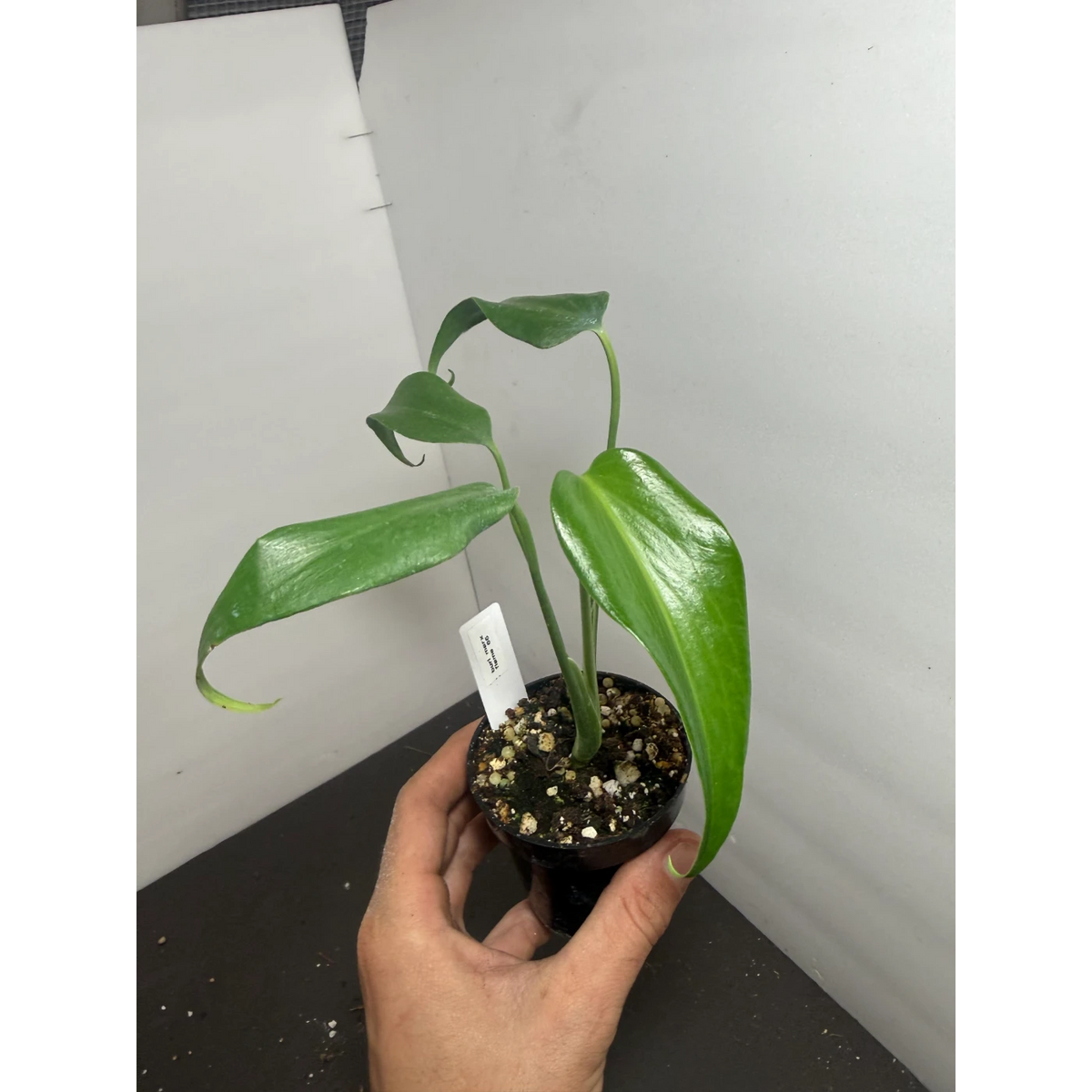
Monstera burl marx flame in a 3 Inch Pot
Monstera burl marx flame in a 3 Inch Pot
Plant Bio
Plant Bio
Monstera Burle Marx Flame (also listed as Monstera sp. ‘Burle Marx’s Flame’) is a rare climbing aroid first noted in Brazilian landscape architect Roberto Burle Marx’s collection around 1981. Young leaves stay entire and pointed; mature ones develop deep, narrow, widely spaced splits that create a distinctive flame or ribcage look. Grown in our Pinellas County greenhouse, it stays more compact than standard Monstera deliciosa while delivering bold architectural foliage once it has a support to climb.
Light Instructions
Light Instructions
Give Monstera Burle Marx Flame bright indirect light for the best leaf cuts and steady growth. An east-facing window or a few feet back from south or west glass works well. Too little light keeps leaves smaller with shallower splits; harsh midday sun can scorch the glossy surface. A grow light helps in darker rooms or short winter days, the same setup we use for other rare Monsteras we ship nationwide.
Is it Pet Safe?
Is it Pet Safe?
No. Like other Monsteras and most aroids, Monstera Burle Marx Flame contains insoluble calcium oxalate crystals. Chewing the leaves or stems can cause mouth irritation, drooling, vomiting, or discomfort in cats, dogs, and people. Keep it on a high shelf or out of reach of pets and children. Contact a veterinarian if any part is ingested. This matches standard guidance for the Araceae family.
Watering Instructions
Watering Instructions
Water when the top 1–2 inches of soil feel dry, then soak until water runs freely from the drainage holes and empty the saucer. Filtered, rain, or distilled water gives better long-term results by reducing mineral buildup that can brown leaf tips. Overwatering is the fastest way to cause root rot on this species. In warm, bright conditions this is often every 7–10 days; wait longer in cooler or lower-light rooms. Self-watering pots help once the plant is established.
Specific Plant Care for This Species
Specific Plant Care for This Species
Use a chunky aroid mix with orchid bark and perlite so roots stay aerated. Keep temperatures between 65–85°F and humidity around 50–70%; Florida air already supports healthy growth. Add a moss pole early so aerial roots can attach and mature leaves develop their signature deep, narrow splits. Fertilize lightly at half strength during spring and summer. Wipe leaves occasionally to keep dust and pests down. We hand-select plants from our St. Petersburg greenhouse for strong roots before shipping across the country.
Couldn't load pickup availability
Share