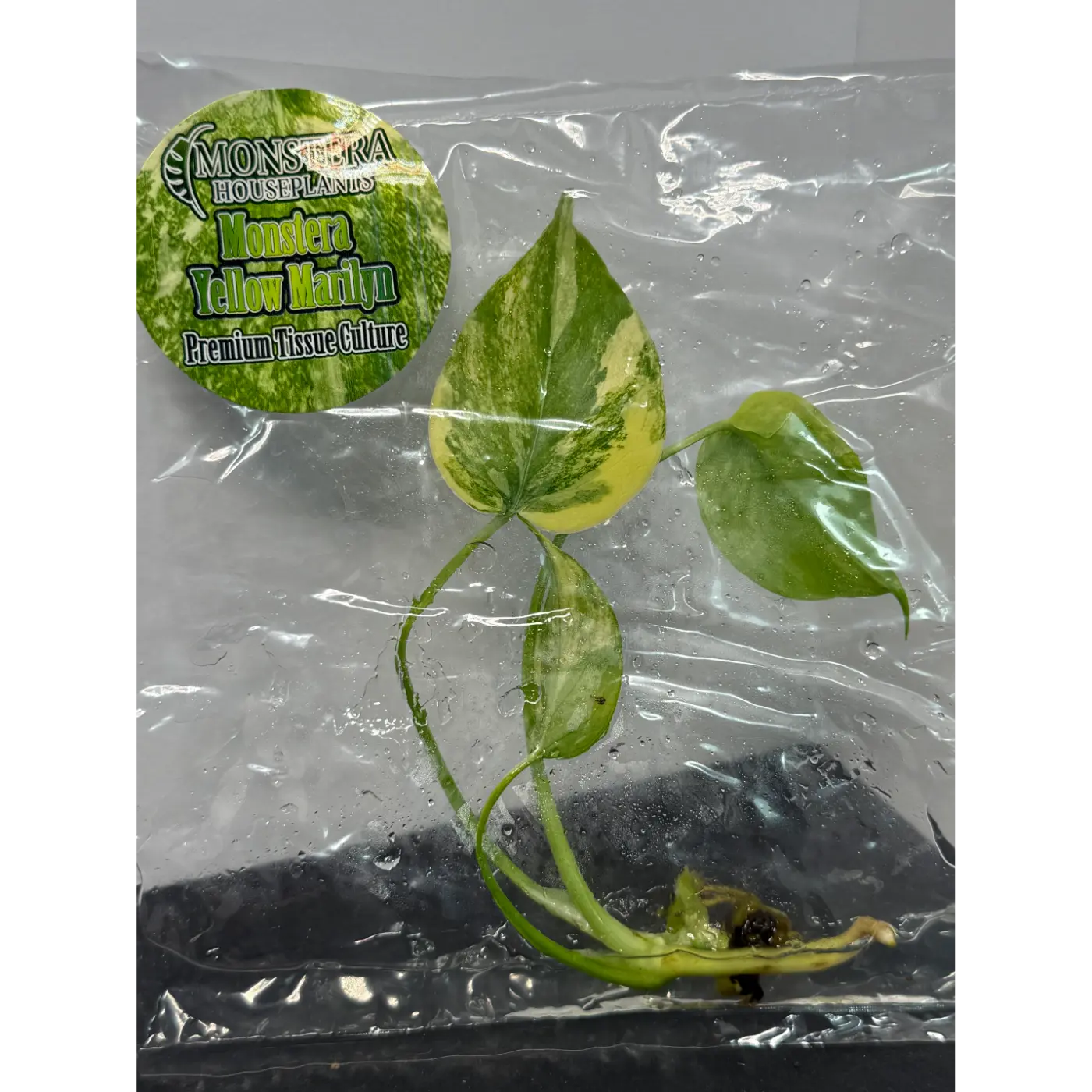
Step 1: Leave the cultures untouched for 1–2 days right after arrival. This gives them time to gradually adjust to the temperature of their new environment.
Step 2: Open the package and gently rinse away all the agar gel from the plants as thoroughly as you can. Running water works best. You can use a soft paintbrush to carefully help clean them. This is one of the most critical steps for success.
Step 3: Transfer the plants into your preferred growing medium. A chunky mix of coco husk and perlite is highly recommended. Many growers also have good results with acclimation plugs, and there are plenty of other suitable options available.
Step 4: Place the potted plants inside a clear, sealed container or plastic bag. Within about 24 hours, you should start seeing water droplets form on the inside walls—this confirms the environment has reached 100% humidity.
Step 5: Position them under grow lights for 8–14 hours per day.
Step 6: Keep the plants fully covered for the first 7 days. Over the next 7–10 days, gradually introduce them to ambient air by opening the container a little more each day until they are fully acclimated.