Snake Plant Mother-in-Law’s Tongue Grow in 6in Pot | Live Houseplant
Snake Plant Mother-in-Law’s Tongue Grow in 6in Pot | Live Houseplant
Couldn't load pickup availability
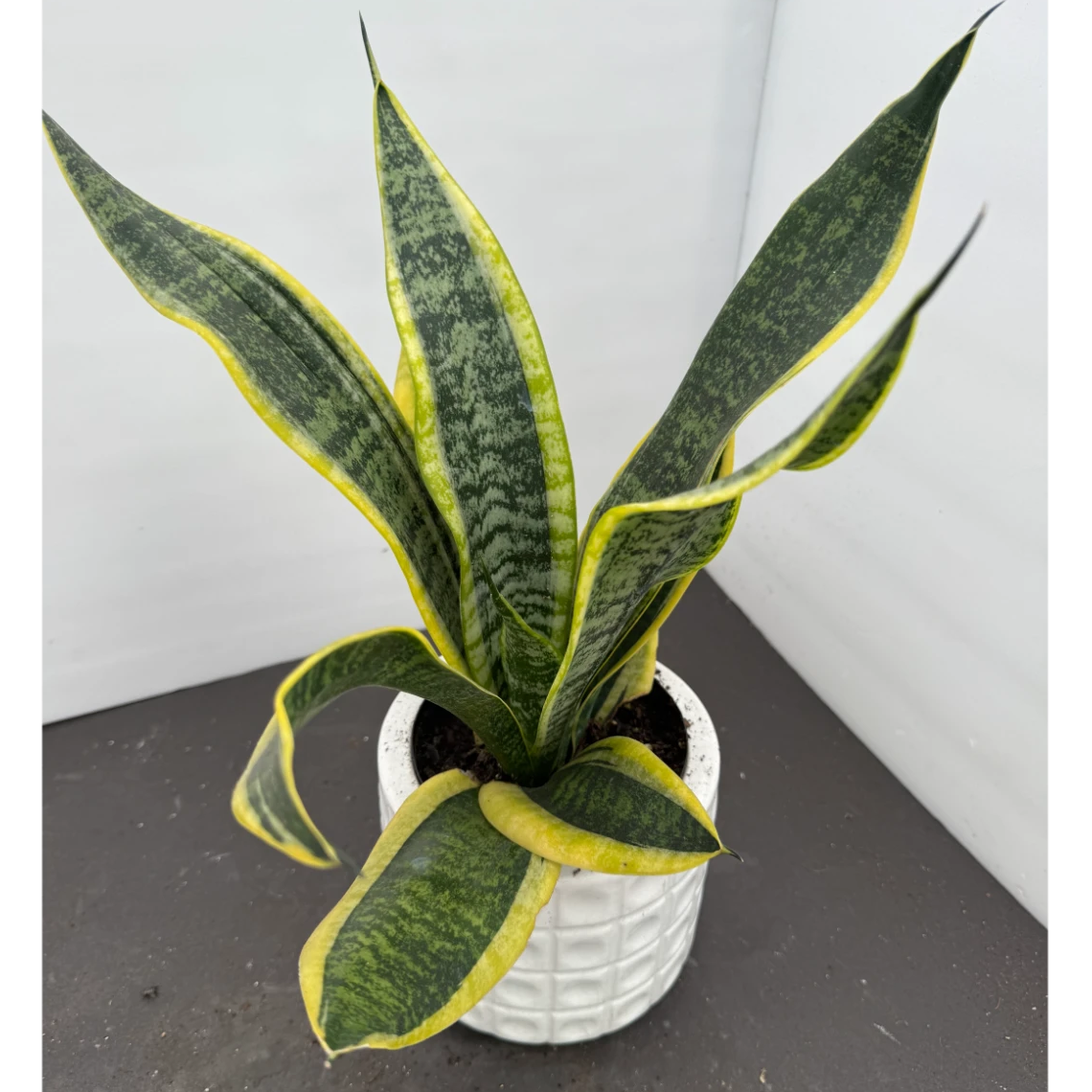
Upright sword-shaped leaves of Dracaena trifasciata (snake plant or mother-in-law’s tongue) with green banding and yellow edges, established in a 6-inch pot and grown in our St. Petersburg, Florida greenhouse for nationwide shipping.
Plant Bio
Plant Bio
This classic mother-in-law’s tongue snake plant (Dracaena trifasciata, formerly Sansevieria) shows the familiar upright leaves with green banding and yellow edges. Grown and hand-picked in our St. Petersburg Florida greenhouse after more than 13 years with tropical houseplants, it arrives established in a standard 6-inch pot ready for homes across the country. The West African native is tough, architectural, and pairs cleanly with Monsteras for vertical contrast without extra fuss.
Light Instructions
Light Instructions
Bright indirect light keeps the yellow edges and banding strongest on this snake plant. It also handles lower light offices or corners, though growth slows and the color softens a bit. Gentle morning sun is fine. Harsh afternoon sun can scorch or bleach the leaves. An east or west window, or a few feet back from brighter glass, works for most homes once it settles in from our Florida greenhouse.
Is it Pet Safe?
Is it Pet Safe?
No, the mother-in-law’s tongue snake plant is not pet safe. The ASPCA lists Sansevieria and Dracaena trifasciata as toxic to cats and dogs because of saponins. Chewing the leaves can cause nausea, vomiting, and diarrhea. Keep it out of reach of pets and young children. For safer options, look at our Monstera varieties and other non-toxic houseplants grown in Florida.
Watering Instructions
Watering Instructions
Water only after the soil dries out completely, usually every 2 to 3 weeks in brighter light and less often in winter or low light. Overwatering is the main way these fail because it leads to root rot, so err on the dry side. Filtered water gives better results and helps prevent brown tip burn from minerals and fluoride common in tap water. Check with a finger before watering this drought-tolerant houseplant.
Specific Plant Care for This Species
Specific Plant Care for This Species
Use a well-draining cactus or succulent mix in a pot with drainage holes. Keep temperatures above 50°F and away from cold drafts. Fertilize lightly once or twice in spring and summer with diluted houseplant fertilizer. Wipe the leaves now and then to keep dust off. Our Florida-grown plants need very little ongoing attention once settled and sit well beside Monsteras and other easy houseplants in typical indoor light.
Share